Federal Reserve Chair Kevin Warsh Signals Further Rate Hikes After Three-Year Hiuse, Sending Wall Street Tumbling

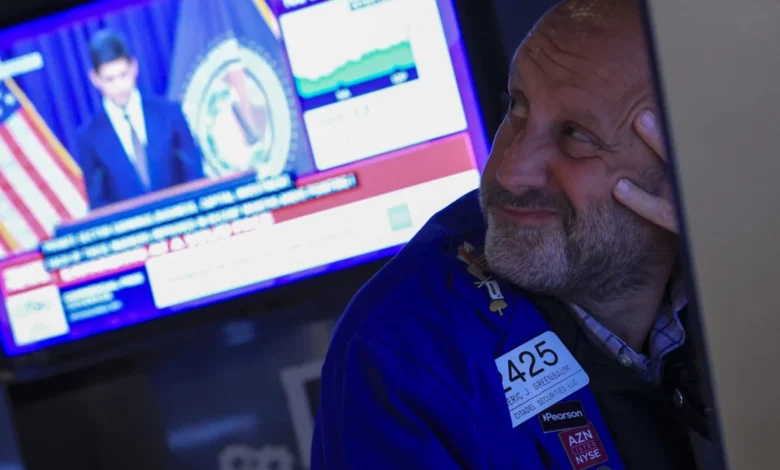
U.S. equity markets experienced a sharp sell-off on Wednesday afternoon, erasing earlier gains after Federal Reserve Chair Kevin Warsh delivered a more hawkish-than-expected press conference. The central bank’s decision to implement its first benchmark interest rate hike in three years—a standard quarter-percentage-point increase—was largely priced into the markets. However, it was Warsh’s subsequent commentary regarding the trajectory of future monetary policy that rattled investors, sparking a broad-based decline across major stock indices, driving Treasury yields higher, and pushing the U.S. dollar to multi-month highs.
The reversal was swift and decisive. Prior to the Federal Open Market Committee’s (FOMC) 2:00 p.m. policy announcement, all three major U.S. stock indexes were trading in positive territory as traders anticipated a predictable, one-and-done monetary adjustment. The mood on the trading floor shifted dramatically as soon as the Federal Reserve chair took the podium to explain the central bank’s rationale and outline its outlook for the remainder of the year and beyond.
Market Reaction and Asset Class Performance
The market fallout was immediate and widespread. The benchmark S&P 500 tumbled 1%, putting the index on a trajectory toward its lowest closing level since July. The Dow Jones Industrial Average bore the heaviest brunt of the intraday correction, plunging 1.7%—a loss of more than 700 points—weighed down heavily by underperforming financial sector shares. Meanwhile, the technology-heavy Nasdaq Composite dropped 0.8% as growth stocks felt the pressure of rising discount rates.
Fixed-income and currency markets reflected a similar flight to hawkish positioning. The 10-year Treasury yield held firm near the 5% threshold, lingering just a day after touching its highest level since 2007. Concurrently, the U.S. dollar index climbed 0.6%, reaching its strongest valuation since late July as global currency traders recalibrated their expectations for U.S. interest rate differentials against other major economies.
Financial derivatives markets shifted rapidly in response to the Fed’s messaging. Fed funds futures trading volumes indicated that market participants are now roughly split on whether the central bank will introduce another consecutive rate increase as early as its upcoming October policy meeting.
A New Rhetorical Stance Under Chair Warsh
The root of the market anxiety lay in a subtle but profound shift in vocabulary and tone used by the Federal Reserve chair. Navigating a delicate communications tightrope, Warsh had to decide whether to frame the rate hike as a localized, isolated adjustment—which carried the risk of signaling to bond vigilantes that the central bank was not serious about combatting stubborn inflation—or as the preliminary phase of a renewed tightening cycle.
He ultimately chose a markedly more aggressive framing. In his opening remarks to reporters, Warsh challenged prevailing assumptions about the restrictiveness of current monetary policy.
“I would be hard-pressed to describe broad financial conditions as restrictive,” Warsh stated. “This view was widely shared by the committee, so we removed a dose of accommodation.”
This rhetorical phrasing marked a distinct departure from the tenure of his predecessor, Jerome Powell. Under Powell’s leadership, the central bank frequently characterized monetary policy as “modestly restrictive,” communicating to the public that borrowing costs had already reached a plateau sufficiently high to cool economic activity over time. By asserting that a federal funds rate sitting between 3.5% and 3.75% was still not restrictive, Warsh implied that a single quarter-point hike was insufficient to achieve the central bank’s price stability mandates. When explicitly pressed by journalists during the Q&A session, Warsh declined to confirm whether monetary policy had entered restrictive territory at all.
Furthermore, Warsh distanced himself from the central bank’s official economic projections. The FOMC’s summary of economic economic projections had previously mapped out expectations for one additional rate hike this year, followed by an extended plateau and eventual easing cycle stretching through 2027.
“Those aren’t my forecasts,” Warsh remarked pointedly when questioned about the consensus outlook. “Those are the forecasts of my 18 colleagues.”
The chair noted that he has not submitted an individual economic projection since assuming his role atop the central bank in May. When asked if the latest rate hike would be followed by a definitive sequence of moves, he offered no reassurance, stating plainly: “I’m not in the forward guidance business.”
Context and Chronology of the Policy Shift
To understand the magnitude of Wednesday’s announcement, one must look at the broader arc of U.S. monetary policy over the past half-decade. Following an aggressive hiking cycle initiated to counter the historic inflation surge of the post-pandemic recovery era, the Federal Reserve had maintained a prolonged pause, holding benchmark rates steady as officials evaluated the lagging effects of monetary tightening on employment and consumer price indices.
Inflation metrics, while down significantly from their cyclical peaks, have continued to show pockets of resilience, particularly within the service sector and labor markets. This economic stickiness prompted internal debate among policymakers regarding whether monetary policy was doing enough to anchor long-term inflation expectations at the central bank’s symmetric 2% target.
The decision to resume raising rates marks a critical juncture. For months, equity investors had operated under the assumption that the Federal Reserve had completed its heavy lifting and would soon pivot toward monetary easing. Wednesday’s press conference shattered that consensus, leaving market participants grappling with the prospect of "higher-for-longer" interest rates that could extend well beyond initial forecasts.
Expert Reactions and Economic Implications
Wall Street analysts and macroeconomic forecasters offered divergent interpretations of the Federal Reserve’s updated posture, reflecting the high degree of uncertainty currently pervading financial markets.
Jeffrey Roach, chief economist at LPL Financial, highlighted the potential for a prolonged restrictive cycle in a note distributed to clients shortly after the meeting concluded. “If the economy keeps up like it has, the Fed is telling us that we may not see a cut until 2028,” Roach wrote. “Instead, another hike may be on its way.”
Similarly, Chris Zaccarelli, chief investment officer at Northlight Asset Management, emphasized historical precedents regarding central bank behavior. “The history is clear that once the Fed begins raising rates, they do it multiple times,” Zaccarelli noted, suggesting that Wednesday’s action may represent the opening chapter of a broader monetary tightening campaign rather than an isolated adjustment.
Conversely, some institutional economists maintained a more sanguine outlook, arguing that financial markets may be overreacting to the chair’s cautious rhetoric. Michael Pearce, chief U.S. economist at Oxford Economics, suggested that the central bank’s ultimate terminal rate remains close at hand.
“We don’t think this is the beginning of another major tightening cycle,” Pearce wrote in a research note. In his view, “markets have too much tightening priced in over the coming year,” implying that incoming macroeconomic data—particularly employment and retail sales figures—will likely validate a pause before additional restrictive measures become necessary.
Broader Economic Impact and Future Outlook
The implications of Chair Warsh’s commentary extend far beyond daily stock market volatility. Higher borrowing costs directly impact corporate balance sheets, consumer credit markets, mortgage availability, and public debt servicing expenses.
For commercial and residential real estate sectors, the persistence of elevated Treasury yields—with the 10-year benchmark holding near 5%—promises to maintain upward pressure on mortgage rates, slowing housing turnover and property price appreciation. Meanwhile, corporations with upcoming debt refinancing schedules will face substantially higher interest expenses, potentially forcing businesses to curtail capital expenditures, slow hiring initiatives, or focus aggressively on margin preservation.
As the Federal Reserve enters its autumn intermeeting period, all eyes will turn toward incoming economic data releases, including the monthly jobs report, consumer price index readings, and personal consumption expenditures data. These metrics will serve as the empirical testing ground for whether Chair Warsh’s assessment of a non-restrictive economic environment is accurate, or whether the central bank will be forced to walk a delicate line between curbing persistent inflation and avoiding an overtightening-induced economic slowdown.